For the Love of Freedom
In some ways, Burma is even more mystical and elusive than my beloved India.
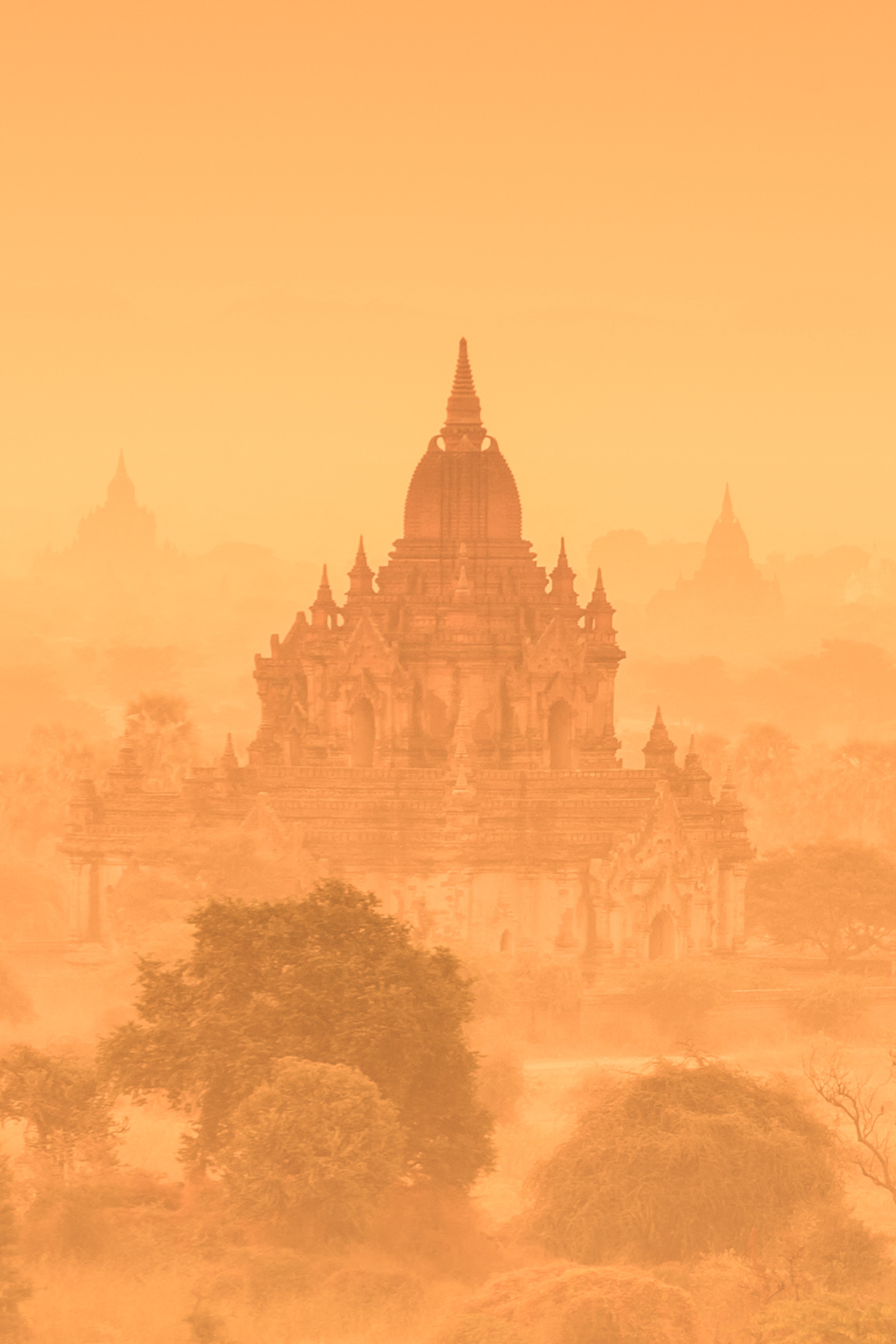
Yet my soul aches knowing the Burmese endure a long history of oppression, fear, and violence. For decades, protesting the atrocities wrought against them has proven to be a gamble with one’s life. Almost every family carries the grief of a loved one who mysteriously disappeared for daring to speak up or question authority. Though muted by those who wield power, the people’s spirits are ever alive, watching and waiting for an opportunity to rise, to fight, to claim a freedom taken from them so long ago. And as the severely oppressed often do, they find quiet ways to defy the suffocating rules that suppress them. In hushed voices, they ask foreigners about the outside world, eager to hear of lands that have triumphed over iron-fisted rule.
A deeper definition of beauty is what I discovered in the Burmese people. Rather than showing resentment, the Burmese I encountered always had a smile to share and a gift to offer, even though they had much to envy in someone like me - a person who traveled freely, whose educational opportunities were abundant, and who had access to libraries upon libraries of books. They remain, by far, the most hospitable, humble, and amiable people I have ever met in all my years of travel. When life pounds you into the ground, sometimes your only option is to rise like a flexible blade of grass, bending in the wind and soaking in the sun with a smile on your face. And so graciously did they do so. In a land where fear was the fodder fed to the people, I discovered having peace was possible even when war raged and the oppressor tried everything to ensure instability and madness. I saw peace – the deepest, most profound peace I had ever known – in the Burmese people. Their temples thrummed with prayerful souls, and the true leader of the people, Aung San Suu Kyi, stood with humble grace, grounding her calls for democracy in Buddhist teachings of nonviolence.
One of my favorite places was a small town tucked into the rolling foothills of the Himalayas which I will call K to protect its people. The town was decked out for tourists with several guesthouses, a book shop, a travel agent, and an eccentric tour guide. Mr. Berry offered walking tours around the village and surrounding farms. He and his wife’s delicious berry salad was one of the highlights of the local market and earned him his name. Mr. Berry was only the first of many “misters” I came to know.
Mr. Story was a cantankerous old Indian man who was stubbornly possessive of the books in his shop. All too often, he refused to sell certain titles to which he had become attached. No doubt it was because good English reads were hard to come by and often illegal to own. Then there was Mr. Home who ran the most popular guesthouse in town. Unfortunately his popularity lived only in tourist guidebooks as he seemed to have grown greedy, competitive, and unkind towards his fellow townsmen. The guesthouse rooms were overpriced and mired in suffocating rules. For those reasons, I stayed elsewhere.
One afternoon, I found myself trying to pry The Life of Pi, from Mr. Story’s protective embrace. I even offered him a deposit to borrow it, so deep was my desire to read the tale. He refused and ranted about how he had lent books to tourists before only to discover they had left them at Mr. Home’s guesthouse. Apparently, Mr. Home had scratched out Mr. Story’s name inside the cover only to write his own. Mr. Home had essentially stolen several of Mr. Story’s best reads. I saw my chance and jumped.
“But sir, I don’t stay at Mr. Home’s guesthouse,” I protested.
“Oh?” His eyes lit up with curiosity. “Where do you stay?”
When I named the less popular guesthouse, his entire demeanor shifted.
“Well then, of course you can borrow this book because I know that you will return it!”
Interesting logic, I thought. But from then on, I was welcomed to borrow freely from his little kingdom of reads.
Another “mister” I had the pleasure to meet was Mr. Wisdom. Inquiring about taking a shared taxi to a nearby village, I saw him eyeing me curiously from outside his house across the street. As I walked away from the travel agent’s office, he called after me. An inquisitive man with a sunshine sparkle in his eyes, I felt drawn to him. He had a charm that led me into a deep conversation which eventually led me into his old teakwood house.
Once in the protection and privacy of his home, he unveiled a treasure chest of secrets. The biggest of which was that he played the lottery and had been on a winning streak.
“But I lose on purpose from time to time, so as not to arouse suspicion. There are always government officials watching us. We must stay one step ahead.”
He pulled out several large sheets of paper covered with grids filled with numbers. Markings connected some of the numbers in green and other numbers were circled in red. He dove into a lengthy labyrinth of words explaining how he used the grid to select winning numbers.
“Sometimes,” he said, “I receive the numbers in dreams or meditation, and other times I am shown formulas to work certain numbers on the grid which help me come up with the winning numbers.”
Mr. Wisdom had three daughters, and he used his winnings to pay for their education at one of Mandalay’s best schools, a full day’s journey away. He became quite animated as he shared his precious secret, talking so fast I often lost the line of thought that led to how he had arrived at some of the numbers. I was mesmerized nevertheless.
Seeing that he held a captivated audience, Mr. Wisdom unearthed another hidden treasure: a photo album heavy with the old banknotes and coins from pre-military-junta Burma. The monies held images of their beloved King Aung San and Queen Khin Kyi, Aung San Suu Kyi’s father and mother. The notes and coins were forbidden. They were meant to be surrendered to the government authorities after the coup, yet Mr. Wisdom resisted, unbending before the law. He stashed the photo album high in a dark, hidden nook under the roof.
After presenting me with another album bulging with striking black-and-white photos of the last Shan princess, he asked about the world beyond Burma’s borders. The news they received was limited and often inaccurate. He asked question after question, hungry to hear the goings-on of the world.
Then perhaps the most emotional of all his questions came. He asked me if the world knew what they, the Burmese, were enduring. Did we know they were all imprisoned within the borders of their land? Were we aware of how badly they were suffering? Did we know they longed for freedom?
Yes, we knew.
He buried his face in his hands and wept. I offered hopeful, encouraging words, though in truth, I felt nothing but sorrow and pessimism for the future of his beloved Burma. Before I left, he pressed forbidden coins and notes into my hands, insisting I give them to my father, also a collector and his peer in age. At first, I refused, knowing how precious they were to him, but he insisted.
It was his way of reaching out to the world. It was the tossing of his net into the sea of hope, his way of connecting to those whose lives were free.